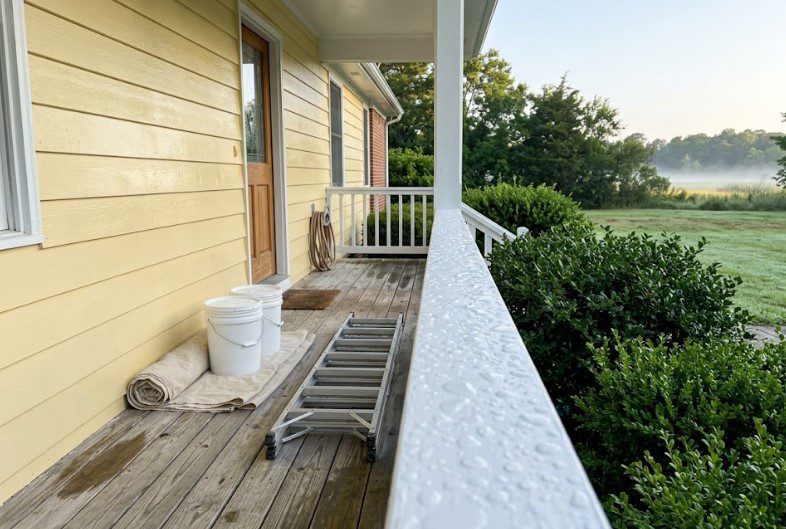





I'm Jack, and I run Legacy Painting out of Yorktown. Six years in, 800-something jobs done, and I still can't walk past a house with peeling trim without mentally repainting it.
What I actually enjoy is the part most painters skip — sitting down with you, figuring out what you're picturing versus what your walls can handle, and being straight with you about it.
Hampton Roads humidity has ruined more paint jobs than bad technique ever has, so a lot of what I write here comes straight from arguments I've won (and lost) with Virginia weather.
Before any paint goes on, we fill the holes, dents and cracks, tape and mud any open seams, sand every repair smooth and prime it. Paint doesn’t hide damage. A fresh, even coat usually makes flaws easier to see, and even after careful repair, a hairline seam can still show up later because houses move.
I’m Jack, and drywall repair before painting is the part of our work most homeowners never see finished, because by the time it’s done, it’s under paint.
Every Hole, Dent and Crack Gets Filled First
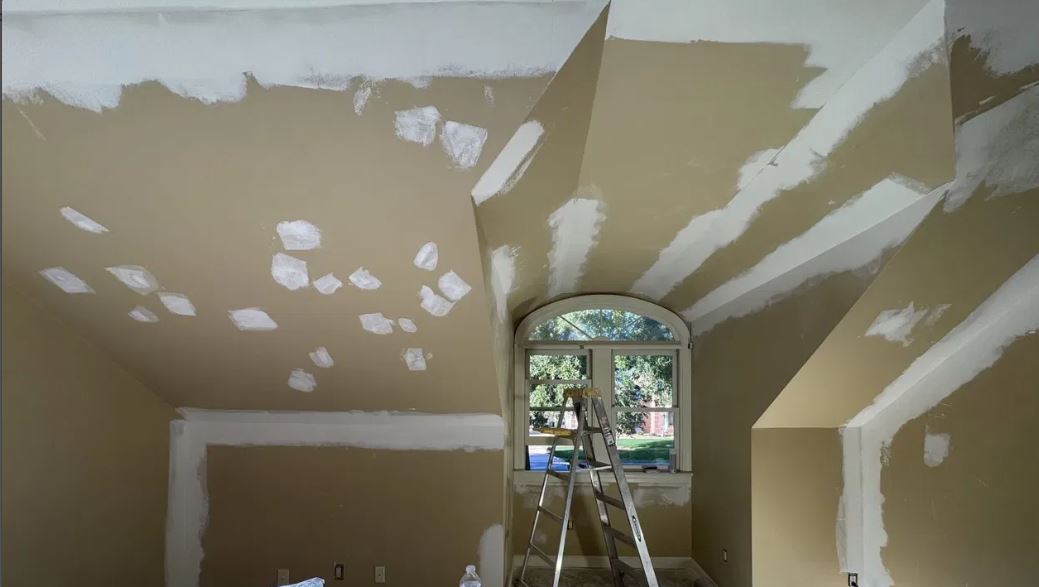
In October 2026, we patched the sloped ceilings in one Newport News bedroom from end to end. The long angles where the ceiling planes meet were mudded along their full length, and the walls around the arched window had their own repairs.
Before any filling starts, we go over the room with a work light held flat to the surface, which shows dents and ridges that overhead light hides.
Patching a room like that means working spot by spot. Each hole, dent or nail pop gets filled, left to set, then sanded flush so it disappears into the wall around it. Corners and angles get the same treatment along their whole run, since a crack there tends to travel.
Ceiling Edges and Openings Take the Most Work
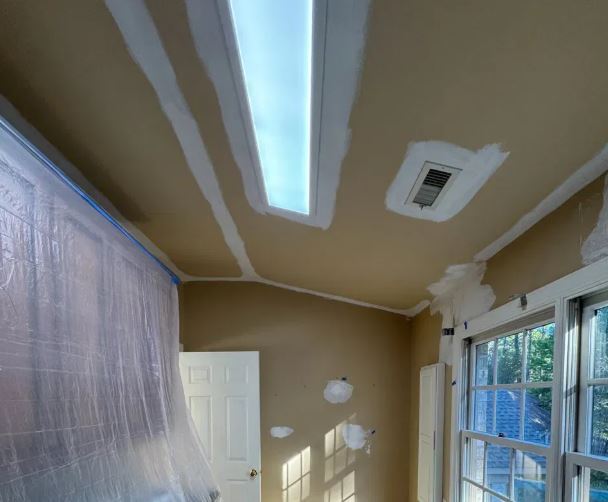
Another room, a narrow one with a skylight, needed attention in different places. Repairing ceiling cracks before painting matters most where the ceiling meets the walls and around anything cut into it, because those edges are where drywall is most likely to split.
In that room, we mudded the full frame around the skylight, the line where the ceiling meets the side walls, and the edges around the vent. A few spots on the walls got patched too. The floor stayed under paper and the furniture under plastic the whole time, because sanding compound makes fine dust that settles everywhere.
Every Repair Gets Primer Before Paint
Patching drywall before painting is only half the job. Joint compound is porous, and the painted wall around it isn’t. Painting over drywall patches without priming them first leaves each one with a slightly different sheen from the rest of the wall, and that ghost shows the moment light hits it from the side. A coat of primer over the repairs evens the surface out, so the finish coats go on and dry the same way everywhere.
This step adds a little time to the job, but it’s the difference between a wall that looks new and one that shows where every repair was. It’s also part of every room we take on through our drywall repair work.
A Hairline Above a Door Can Show Up Again
Hairline cracks in painted walls can show up again, especially at the corners of doors and windows.
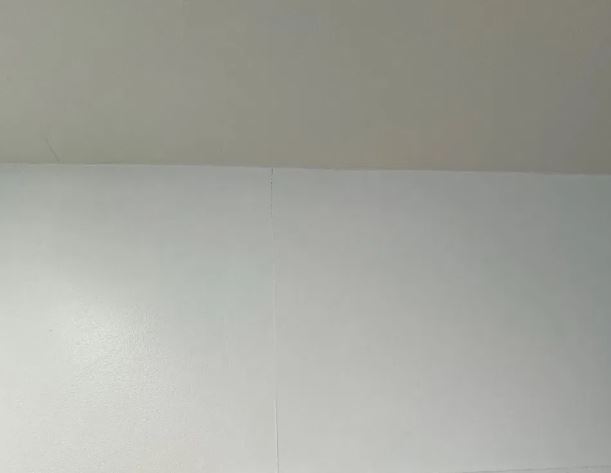
That’s what happened on another wall in that home. During prep, the seam above the door had only a fine crack that looked tight, but previous painters filled it and painted over instead of opening it up. Once the heat came on and the air dried out, the framing around the door shrank, the old tape joint underneath split again, and a thin vertical line came back through the new paint. We cut the seam open along the line, re-taped it, feathered new compound out wide, primed it and repainted the whole wall above the door.
Ceiling Lines Shift With the Seasons
Ceilings move too. Drywall seam cracks along a ceiling often follow a joint in the board, and roof framing above can shift slightly as temperatures and humidity change through the year.
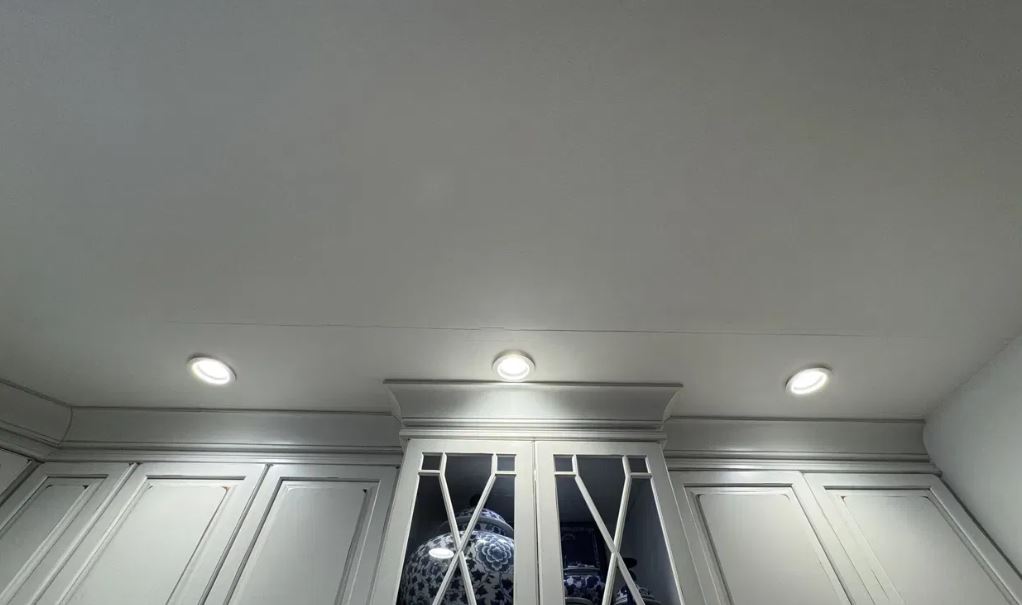
In that home’s kitchen, a faint line showed up across the ceiling above the cabinets. It sat out on the flat of the ceiling, a little in front of the crown molding. Out on the open ceiling, the line followed a seam in the board, so we cut it open, re-taped it, finished it smooth, primed it and repainted the ceiling. If a line stays closed through a full year of seasons, the repair has usually held.
FAQ
Will thicker paint fill small cracks?
No. Paint can bridge a very fine gap for a short while, but it isn’t flexible enough to hold it closed. As the house moves, the line opens back up and shows through the new coat.
Can I patch nail holes myself before you arrive?
You can, but let us know where. Patches that haven’t been sanded and primed often show through the finish, so we may need to redo them as part of the prep anyway.
Is repair included in a painting quote?
Small holes and minor cracks usually are. Larger damage, like a water-stained section or a long run of loose tape, gets priced on its own line so you can see exactly what it covers.
Does a textured ceiling change how repairs are done?
Yes. A patch on a textured surface has to be textured to match before primer and paint, or the smooth spot can stand out more than the original damage did.
Do repairs make the job take longer?
They can, depending on how much there is. Compound has to set before it’s sanded and primed, so a room with heavy damage needs more prep time than one with a few nail holes.
Repair First, Paint Second
An extra day on repairs beats noticing a patch every time the afternoon light comes through the window. If you’re planning this kind of work, winter suits it well, since indoor winter painting goes smoothly as long as the heat stays on. I hold a light flat against your walls the same way, so you know which repairs come first before any number is on the table. Request a consultation whenever you’re ready.