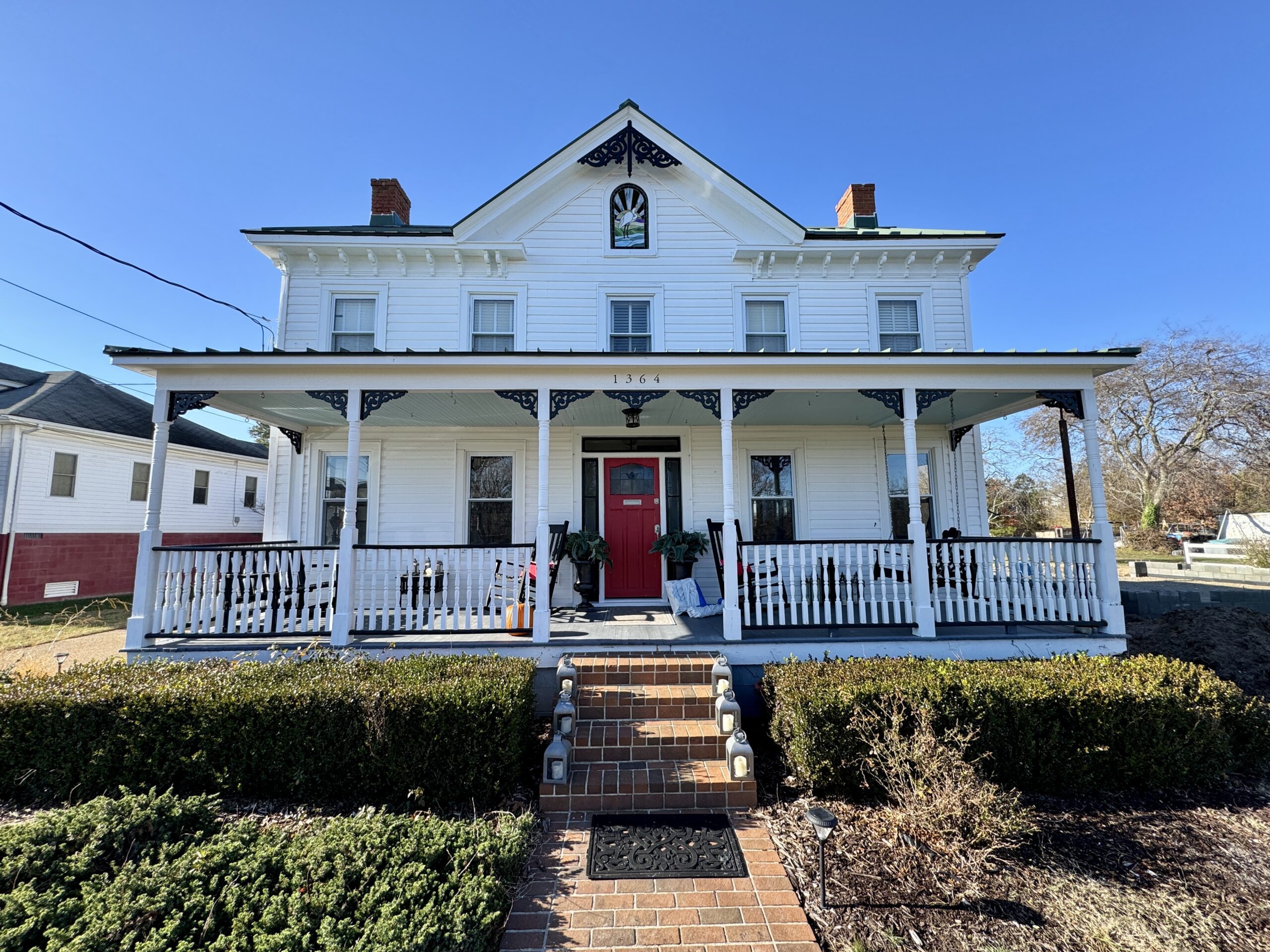



Painting in high humidity can work, but it changes when and how you paint. In Hampton Roads we watch the dew point more than the humidity number: if a surface is near the dew point, moisture settles on fresh paint and causes streaks or poor adhesion.
Outside, we start after the morning dew burns off and stop early enough for the paint to dry before evening. Inside, running the AC or a dehumidifier keeps drying on track.
Painting in High Humidity: Can You Do It?
Can you paint when it’s humid? Yes, most days, if you pick the right hours and the right surfaces.
Here’s how we handle the usual Hampton Roads situations:
| Situation | OK to paint? | What we do |
|---|---|---|
| Muggy afternoon | Usually | Follow the shade |
| Morning dew | Not yet | Wait until dry |
| Rain coming | No | Stop hours before |
| Humid interior | Yes | AC or dehumidifier |
Dew Point: The Number That Matters Outside
The dew point is the temperature at which moisture in the air turns into water on a surface. When siding or trim cools to that temperature overnight, it gets wet even on a clear day, and paint on a wet surface won’t bond.
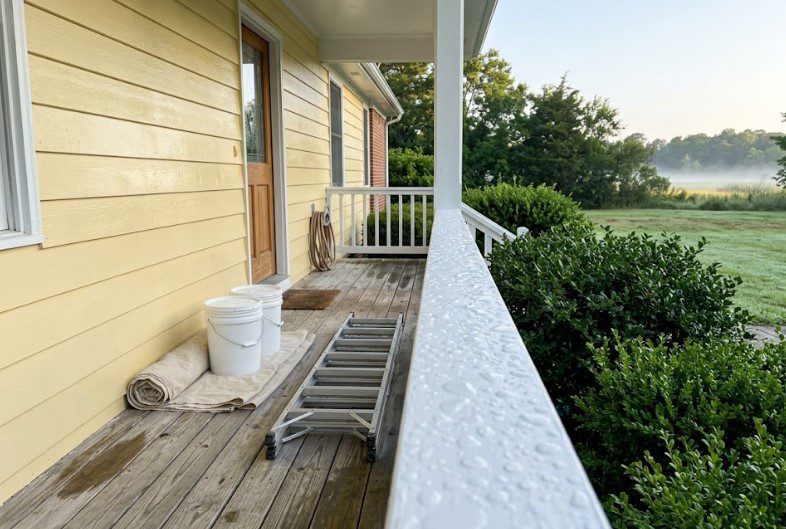
If you can draw a line with your finger through the moisture on your railing, it’s too early to paint.
Brown Streaks After a Humid Night
When fresh latex paint dries slowly in damp air, some of its water-soluble ingredients rise to the surface and run. This is called surfactant leaching, and it shows up as tan or brown streaks, often along seams and below corners where water collects. It looks alarming but it’s cosmetic: the paint underneath is fine, and the residue washes off with water once the paint has set.
The brown streaks showed up the morning after a humid night on this home. They ran down the butt joints in the blue siding and from the corner of the window trim, right where dew had gathered overnight.
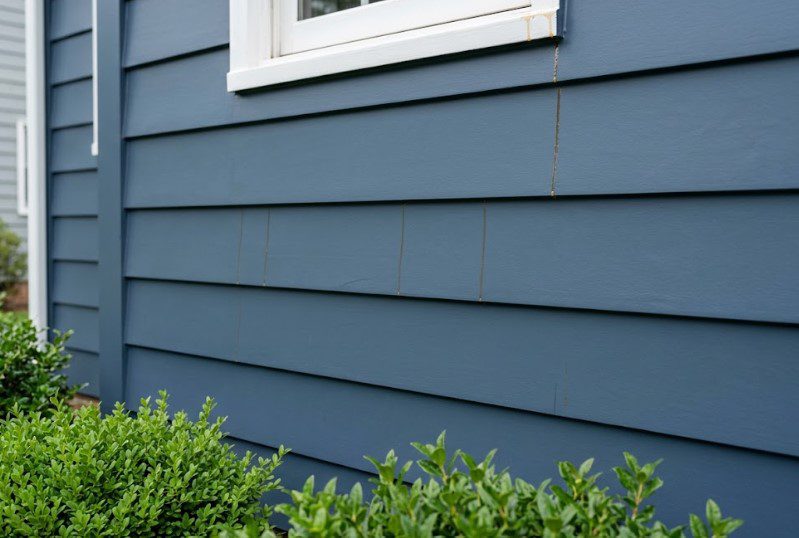
The way to avoid it is timing: finish each side early enough that the paint has more hours to dry before the evening dew.
Humid Wood and Siding: We Check Before We Paint
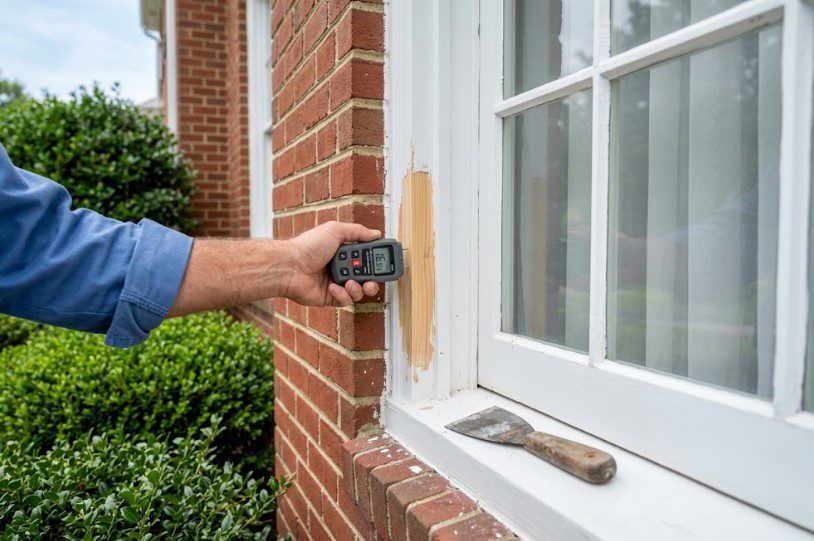
In a Hampton Roads summer, bare wood soaks up moisture from the air, and it can feel dry while it’s still holding water inside. Paint sealed over damp wood traps that moisture, and as it tries to escape it lifts the film, which is one of the main reasons why paint bubbles.
So before primer goes on bare wood, the crew checks it with a moisture meter. On this window casing, they’d scraped the old paint back to bare wood beside the brick, then pressed the meter to it. It read 16%, too wet to prime, so they moved on to another side of the house and came back the next afternoon once it had dropped to 12%.
Painting Inside on a Muggy Day
Indoors, you control the air. In a closed-up house with the AC running, humidity usually stays in a range paint is happy with; the trouble comes when windows are open on a muggy day or the AC is off. The EPA’s guidance on indoor humidity recommends keeping it below 60%, ideally between 30 and 50%, which is a good target for painting too. Recoat times stretch when it’s higher, so the second coat waits.
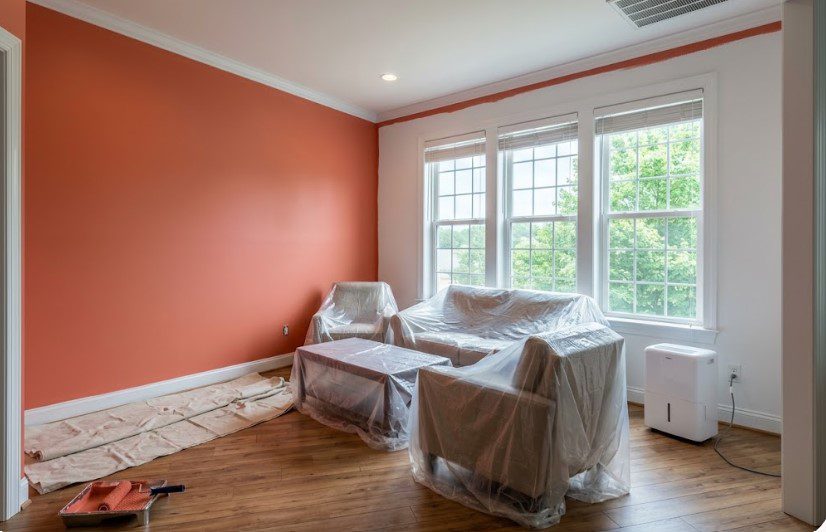
Bathrooms are their own case, since every shower adds steam, and that’s usually behind peeling paint on a bathroom ceiling. Anywhere else, keep the AC on until the last coat is dry.
How We Schedule Around Hampton Roads Humidity
On summer exteriors, the day is planned around the dew, not the clock:
- Start: once surfaces are dry
- Order: follow the sun around the house, so each side is painted once it’s dry and before it’s in full afternoon heat.
- Stop: wrap each side by the afternoon, giving the paint more hours before evening dew.
- Weather: check the forecast the night before and hold off if rain is due
FAQ
What humidity is too high to paint outside?
The humidity number matters less than the dew point; what we check is whether the surface is at least 5°F above it. The data sheet for Sherwin-Williams Duration Exterior also caps relative humidity at about 85%, so on days above that, we wait.
Will rain the next day ruin fresh paint?
Not usually, if the paint had more hours to dry first. Rain sooner than that can cause streaks or wash some paint off, which is why we stop early when rain is in the forecast.
Does humidity affect paint color or sheen?
It can. Slow drying in damp air can leave uneven sheen or the brown surfactant streaks above, though the color itself doesn’t change once the paint has dried.
Planning a Summer Paint Job?
We’ll plan the days around the weather, check the wood before we prime, and tell you honestly if a day isn’t right to paint. That’s how we approach exterior painting in Hampton Roads. Book a free estimate today.

I'm Jack, and I run Legacy Painting out of Yorktown. Six years in, 800-something jobs done, and I still can't walk past a house with peeling trim without mentally repainting it.
What I actually enjoy is the part most painters skip — sitting down with you, figuring out what you're picturing versus what your walls can handle, and being straight with you about it.
Hampton Roads humidity has ruined more paint jobs than bad technique ever has, so a lot of what I write here comes straight from arguments I've won (and lost) with Virginia weather.