



I'm Jack, and I run Legacy Painting out of Yorktown. Six years in, 800-something jobs done, and I still can't walk past a house with peeling trim without mentally repainting it.
What I actually enjoy is the part most painters skip — sitting down with you, figuring out what you're picturing versus what your walls can handle, and being straight with you about it.
Hampton Roads humidity has ruined more paint jobs than bad technique ever has, so a lot of what I write here comes straight from arguments I've won (and lost) with Virginia weather.
You can paint a stained front door, but the old stain has to come off first, the surface needs a primer, and the topcoat should be a paint made for doors. Skip any of those steps and the new color starts wearing through right where your hands and the weather hit hardest.
Front doors look like small jobs on paper, yet they change how a whole house looks from the street. The steps behind a finish that lasts are the same whether the door is plain or full of glass.
Old Stain Wears Out From the Bottom Up
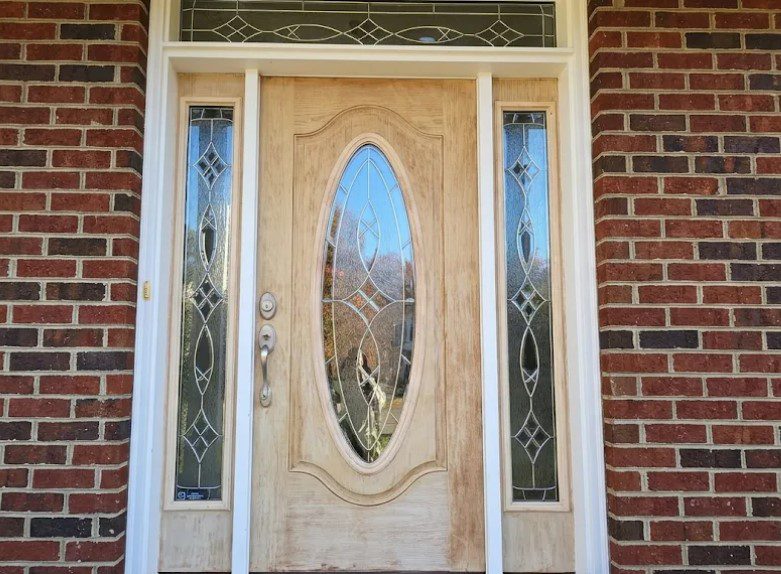
Stain doesn’t fail all at once. It fades, then thins, and the lower part of the door usually goes first, since that’s where rain splashes back off the step and where feet and packages bump it every day.
We saw that pattern on a brick home in Hampton Roads where the owners wanted the front entry to stop looking tired. The faded front door stain had gone patchy across the whole slab, and the bottom panels and sidelight frames had worn down almost to the bare surface.
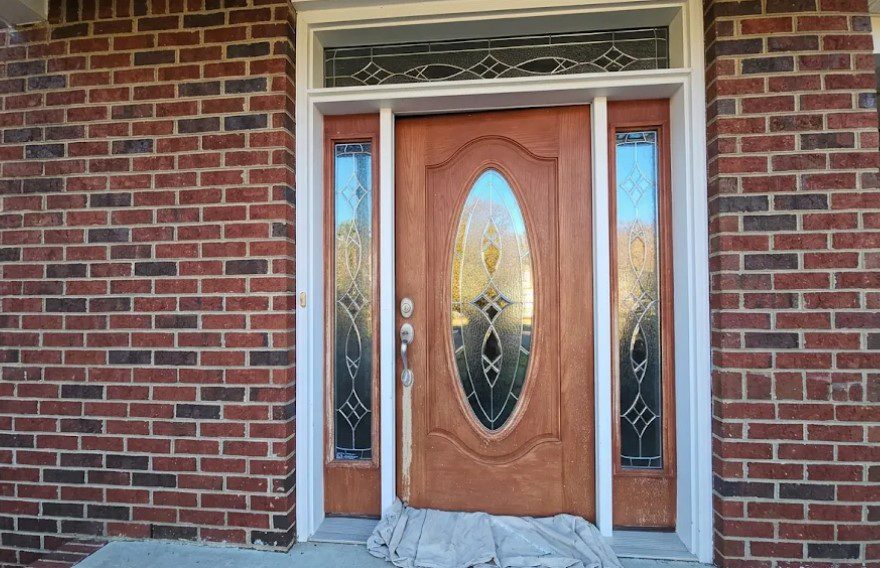
You might wonder whether another coat of stain would have been easier. It would have been faster, but stain needs regular recoating to keep its color, and this door had already lost that fight.
Paint covers the surface with a solid film that shrugs off sun and rain much longer than stain does. For the owners, the paint vs stain front door decision came down to wanting a finish they wouldn’t have to keep refreshing.
Stripping Gives the Paint a Fair Start
Paint brushed over old, chalky stain can only hold on as well as that stain does. If the stain underneath keeps breaking down, it takes your new paint with it. Most trouble with painting a stained front door starts right there. Stripping stain off a front door and its sidelight frames was the first real step on this job.
Before any stripper went on, the decorative glass got taped off and paper went down across the step. Decorative glass like this is easy to scratch and hard to clean once product gets in the seams, so we protect it first and work around it the whole way through. Once the stain was off, the surface got a light sanding and a wipe-down so nothing loose was left behind.
Primer Is the Coat You Never See
Priming a front door does two jobs at once. It bonds to the bare surface so the color has a firm base, and it evens out the surface so the color looks the same from top to bottom instead of blotchy where the old stain soaked in deeper.
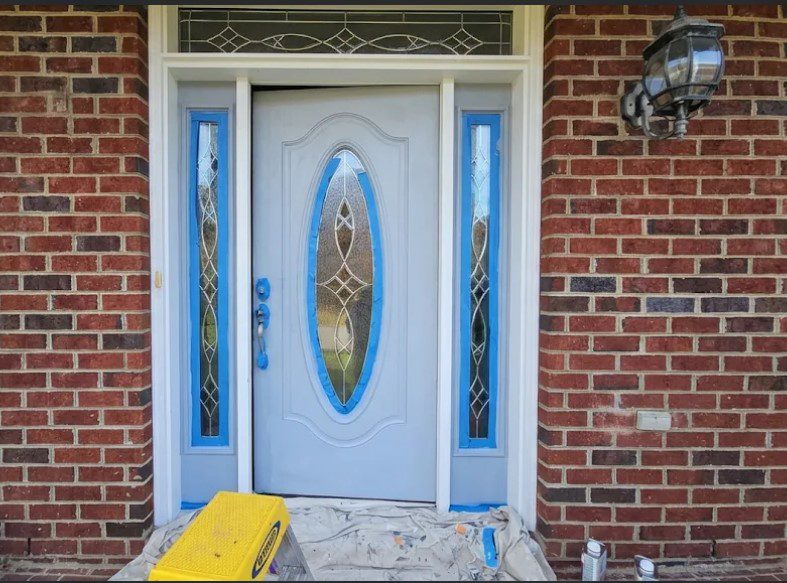
You can see the blue tape running along every piece of glass and wrapped around the handle and deadbolt. That tape stays on through the primer and the finish coats, which is how the lines along the glass stay crisp. We used Sherwin-Williams Exterior Latex Wood Primer, tinted gray, because it’s made to bond to bare wood outdoors and resist mildew in our humid summers.
The Finish Matters as Much as the Color
For the front door paint finish, I went with Sherwin-Williams SnapDry Door & Trim Paint in semi-gloss. I picked it for three reasons.
- First, it’s made for this exact job. It’s built for doors, trim and shutters, rated for exterior use, and made to resist UV and weather, which matters on a door that takes direct sun.
- Second, it resists dirt and fingerprints, and a front door gets touched more than almost any painted surface on your house.
- Third, it dries fast enough that the door can be closed the same day without sticking to the weatherstripping, so the house was never left with an open entry overnight.
As for the best sheen for a front door, semi-gloss is my usual pick. It’s easier to wipe clean than a flatter finish, and it gives the raised panel around the oval glass a little shine that catches the light. Our humid Virginia summers also mean we watch the weather closely when we schedule exterior paint, and a door is no exception.
Painting door sidelights takes the most patience. Each frame is narrow, the glass is right there, and every brush stroke shows, so we cut those in by brush and saved the flatter areas for last. Two coats of the brown followed once the primer was ready.
A Warm Brown Pulls the Whole Entry Together
The owners chose a rich brown with warm, reddish undertones, and against the red brick and the white trim, it ties the whole entry together.
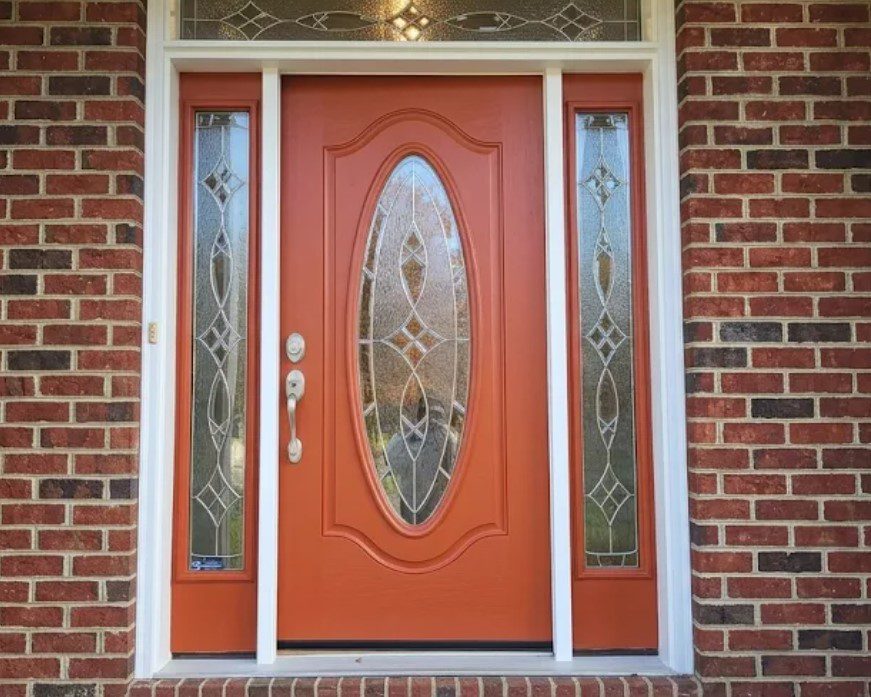
If you’re picking a front door paint color for a brick house, hold samples right up against the brick in daylight before you decide. A color that looks perfect on a chip can turn muddy next to red brick, while a warm tone like this one picks up the color in the mortar and makes the door look like it belongs there.
This is the kind of small project we handle all the time as part of our doors and trim work.
Questions You Might Have
Does the door have to come off its hinges?
Usually not. We protect the hinges, glass and hardware with tape and paint the door in place. Keeping it hung lets you close and lock your home each night while the work is still going on.
Can you still use the door during the job?
Yes, with some care. Between coats we leave the door propped open until the paint is dry to the touch, then you can come and go normally, just avoiding the fresh edges where possible.
Does the inside of the door get painted too?
Only if you want it to. When just the outside changes color, I paint the hinge edge to match the outside and leave the latch edge matching the inside, so each side looks right when the door is open.
Could I go back to a stained look later?
It’s possible, but it’s real work. The paint would have to be stripped completely before any stain could go on. That’s why I always suggest you live with paint samples for a few days before committing.
How long does a job like this take?
Most stained doors with sidelights take two to three days, since stripping, sanding, priming and two finish coats each need their turn. Weather can stretch that, because exterior paint needs the right conditions.
A Fresh Door Changes the View From the Street
A tired, faded door makes even a well-kept house look neglected, and a fresh one does the opposite. If your stained door is wearing thin at the bottom or fading in the sun, get in touch and we can talk through colors that suit your entry.