



I'm Jack, and I run Legacy Painting out of Yorktown. Six years in, 800-something jobs done, and I still can't walk past a house with peeling trim without mentally repainting it.
What I actually enjoy is the part most painters skip — sitting down with you, figuring out what you're picturing versus what your walls can handle, and being straight with you about it.
Hampton Roads humidity has ruined more paint jobs than bad technique ever has, so a lot of what I write here comes straight from arguments I've won (and lost) with Virginia weather.
Can you paint inside in winter? Yes. In Hampton Roads homes, winter is one of the easiest times to paint interiors as long as the room stays warm and the air keeps moving. We keep the heat at 65°F or more from the first coat until the paint has dried overnight, ventilate in short bursts, and use low-VOC paint so the house doesn’t hold the smell.
Cold outside walls and unheated rooms are the only real problem, and they’re solved by warming the surface, not just the air.
Keep the Heat On (and Steady)
Latex paint needs warmth to dry properly and to bond as it does. If the house cools down overnight, the film can stay soft, dry unevenly or fail to level, and the second coat goes on over paint that isn’t ready.
Most interior paints list a minimum temperature on the can, and that applies to the air and the walls for the whole drying period, not just while the roller is moving.
The first thing we asked the homeowner in this kitchen to do was leave the heat on overnight. It was January, with snow on the ground outside the window, and the thermostat held at 73°F while our crew rolled the first coat. It was 28°F outside that morning and barely got above freezing all day, so the window stayed shut and a small fan kept the air moving instead.
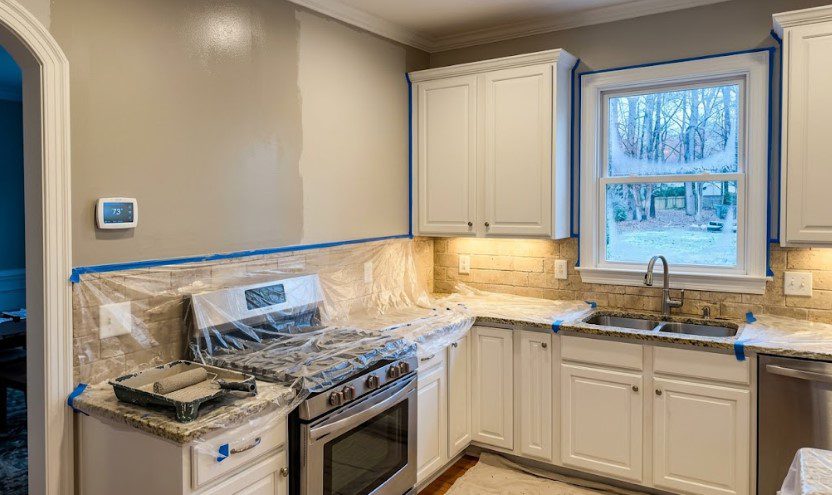
If you’re planning a winter repaint, don’t let the house drop back at night to save on heating; the paint needs those hours too.
Ventilating a Closed-Up House
In summer, we’d open every window. In January, that throws the heat out with the fumes. The answer is short bursts: crack a window for 10 to 15 minutes, run a box fan to push air out of the room, then close up again and let the heat recover.
Low-VOC paint does most of the work, since the EPA’s guidance on VOCs and indoor air points out that levels indoors can run well above outdoor levels while paint is drying, and lower-emitting products and fresh air are the two ways to bring them down.
Small rooms build up fumes fastest, like this Yorktown bathroom. We set a box fan on the floor pointed toward the open door while the deep blue walls dried, with snow still on the lawn outside. The window was cracked for about 10 minutes every hour, and the walls were done in Benjamin Moore Aura Bath & Spa, a low-VOC matte made for steamy rooms.
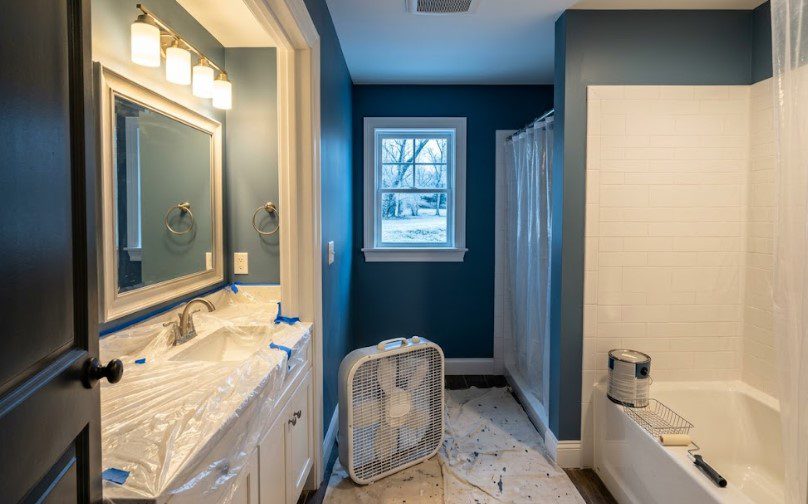
If the smell is strong enough to bother you, it’s time for another burst of fresh air.
Cold Outside Walls and Sunrooms
The thermostat measures the air in the middle of the room, not the wall you’re painting. Outside walls, sunrooms and rooms over a garage can sit well below the room temperature in winter, and paint on a cold surface dries slowly and can stay soft. Moisture condensing on a cold wall is one of the reasons why paint bubbles, too.
This sunroom had windows on two sides and frost on the glass the morning we arrived. The thermometer read 44°F in the room, and the outside wall under the windows was even colder to the touch. The crew brought in an oil-filled radiator heater and set a thermometer on a step stool to track the room before any paint went on.
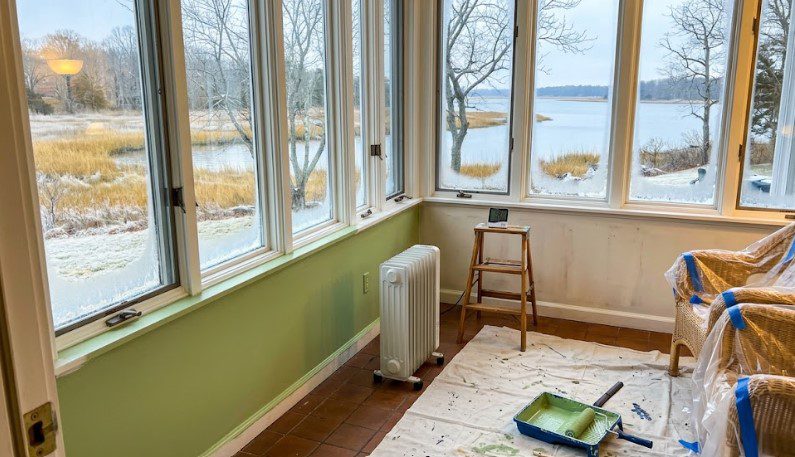
Press your palm to an outside wall before you paint. If it feels like a window, warm the room first.
How Long Does Paint Take to Dry in Cold Weather?
In a heated house, not much longer than any other time of year. How long paint takes to dry in cold weather depends on the room, not the forecast: at 70°F inside, our crews typically recoat walls after 3 hours in winter, compared with 4 hours on a humid summer day. Dry winter air from the furnace actually helps.
Dry to the touch isn’t the same as cured, though. Glossier finishes on trim and doors stay soft a little longer, which is worth knowing when you’re deciding which sheen to use in a busy room. In an unheated room, every one of those times stretches, which is why we warm the room first.
Why Winter Is a Good Time for Interior Painting
I’d go further than saying winter interior painting works. For a lot of homeowners it’s the best time to do it. Exterior work slows down once it’s cold, so interior dates are easier to get; the furnace keeps the air dry, so paint behaves predictably; and the job is done before spring, when everyone wants their outside painted.
FAQ
Is it safe to paint inside with the windows closed?
With low-VOC paint and short bursts of fresh air, yes, and that’s how most winter interior painting gets done. Keep pets and anyone sensitive to smells out of the room until it’s aired out.
Can I paint a room that has no heat, like a garage or sunroom?
Only if you can bring it up to the paint’s minimum temperature and keep it there overnight. A portable heater usually does it, as long as the walls warm up, not just the air.
Will the paint smell longer in winter?
A little, because the house is closed up.
Thinking About a Winter Repaint?
We’ll check your rooms for cold walls, plan the heat and airflow, and give you dates that work around your holidays. It’s part of every job of interior painting in Yorktown and Hampton Roads we take on. Book a free estimate today.