


Paint bubbles when the film rises off because it was not properly prepared, moisture or heat. Bubbling and blisters are a frequent problem on summer heated, humid interior walls and exterior wood in Hampton Roads, but can be solved and prevented with proper diagnosis and preparation.
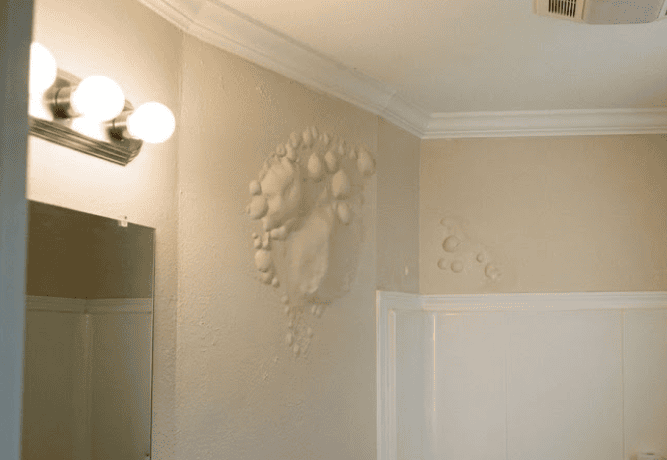
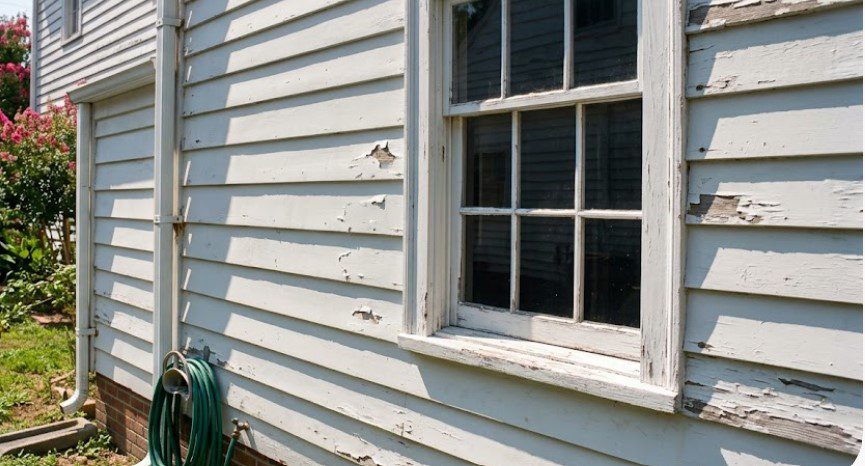
We’ve had this happen dozens of times with local jobs. The images below are photos of projects we’ve worked on in and around Hampton Roads that demonstrate a bathroom with moisture issues and a wood-sided that was in need of repair with the classic blistering effect caused by trapped moisture and heat.
What Causes Paint to Bubble?
The bubbling (or blistering) of paint occurs when the film of the paint is forced away from whatever the paint film is applied to. Moisture, heat and lack of preparation are the three largest problems that we see every season in coastal Virginia.
The top cause is moisture.
Water vapor or liquid water within the wall, wood or substrate will attempt to go to the exterior and raise the paint. Trapped moisture can form bubbles anywhere from the substrate up to the top coat. Very common in bathrooms, kitchen areas and on exterior wood siding after rainy weather and/or high humidity.
In these damp rooms, interior painting calls for extra prep and the right primer. Heat is right up there. Solvents evaporate too quickly when painted in direct sunlight or on a surface that is too warm, resulting in bubbles. Poor prep (dirty, dusty, glossy or unprimed surfaces) and applying paint in high humidity complete the list.
Paint Blistering on Wood: Why It Is Worse in Coastal Virginia
Paint blistering on wood is one of the most frequent calls we get. Wood is porous. When it gets wet from rain, humidity, or even morning dew and then the sun hits it, the moisture turns to vapor and has nowhere to go except through the paint. Hampton Roads humidity, salt air, and intense summer heat make the paint film fail faster than in drier climates.
We see this constantly on older homes with original wood siding, window trim, and fascia. The damage usually starts at joints, around windows, or where the siding meets the foundation, exactly the spots shown in the photos. Skipping primer on bare or weathered wood makes it even worse. A proper exterior painting job treats these failure points before any finish coat goes on.
Alt text: Painter pointing to moisture stain and peeling paint at the corner joint of wood siding
Caption: Moisture was leaking in at this corner joint. The water stain and lifted paint are textbook signs of blistering caused by trapped moisture in the wood.
How to Fix Bubbling and Blistering Paint (The Right Way)
You cannot just paint over bubbles. They will come back, often worse than before. The process we follow on every warranty job is:
Identify and fix the moisture source first (leaky pipe, missing caulk, poor ventilation, or wood that stays wet).
Scrape all loose and blistered paint down to a sound surface.
Sand the area smooth and feather the edges.
Prime with a high-quality primer designed for the surface (we use exterior primers with extra moisture resistance on wood).
Recoat only when temperature, humidity, and surface conditions are within the paint manufacturer’s specifications. Never paint in direct sun or when the wood is damp.
Alt text: Painter scraping blistered paint from exterior wood siding with drop cloth, debris, and sanding block
Caption: All blistered paint must be removed. We scrape, then sand, and collect the debris so we can see the true condition of the wood underneath.
Alt text: Applying exterior primer to repaired wood siding after scraping paint blisters, with ladder and primer can
Caption: A quality primer is non-negotiable on wood. This step is a big reason our 3 to 5 year warranty covers blistering.
Once the primer is dry, we apply the finish coats. The last photo shows the same house after we completed the repair: tight, even paint with no remaining blisters.
Alt text: Freshly painted exterior wood siding after blister repair in Hampton Roads, showing window, downspout, and folding chair
Caption: The finished result. Proper prep and painting in the right conditions stopped the blistering and restored the siding.
How to Prevent Paint from Bubbling (The Prep Our Warranty Relies On)
Prevention is cheaper than repair. The same steps that let us offer a 3 to 5 year warranty against blistering (plus free lifetime touch-ups on full exterior jobs) will keep your paint looking good:
Fix moisture problems before you ever open a can of paint.
Never paint in direct sun or when the surface is hot.
Wash, sand, and prime every surface, especially bare or weathered wood.
Check temperature and humidity. We wait for the right window even if it means delaying a job.
Use the right products for coastal conditions.
Lead-Paint Safety Note for Older Homes
If your home was built before 1978, the paint may contain lead. Do not dry-scrape or sand it yourself. Have the surface tested and hire a certified contractor. We follow EPA RRP rules on every pre-1978 job.
When to Call a Professional
If bubbling keeps coming back, the moisture source has not been fixed or the prep was skipped. Recurring blistering on wood siding or in bathrooms is almost never a just-paint-over-it problem.
We warranty our work against blistering for 3 to 5 years because we refuse to take shortcuts on prep. If you are seeing bubbles on your walls or siding, we will come out, diagnose the real cause, and give you a straightforward estimate. No pressure, just honest advice from a crew that has been painting Hampton Roads homes since 2015.
Ready for a free estimate? Contact Legacy Painting. We will look at the problem in person and tell you exactly what it will take to make it last.
About the Author
Jack Kelleher is the lead painter and owner of Legacy Painting in Hampton Roads, Virginia. Since 2015 he and his crew have specialized in exterior wood, coastal properties, and moisture-related paint failures. All full exterior jobs include a 3 to 5 year warranty that covers blistering plus free lifetime touch-ups.
Frequently Asked Questions
Why is my paint bubbling?
Paint bubbles when the film lifts from the surface, almost always because of moisture trying to escape, heat during application, or poor surface preparation.
What causes paint to bubble?
The most common causes are trapped moisture, painting in direct sun or high heat, dirty or unprimed surfaces, and applying paint when humidity is too high.
Why is my exterior paint blistering on wood?
Wood absorbs moisture. When that moisture turns to vapor (especially in Hampton Roads humidity and heat) it pushes the paint off the surface. Lack of primer on bare wood makes it worse.
Can you paint over bubbled paint?
No. The blisters will reappear. You must scrape, sand, fix the moisture source, prime, and then repaint in the correct conditions.
Does humidity cause paint to bubble?
Yes. High humidity during application or while the paint is curing prevents proper adhesion and can trap moisture under the film, leading to later bubbling.
How do I stop paint from blistering on siding?
Fix any moisture intrusion, never paint in direct sun, always prime wood, and only apply paint when temperature and humidity are within the manufacturer’s range.
Is paint blistering covered by a warranty?
Our 3 to 5 year warranty specifically covers blistering because we control the prep and application conditions that cause it. Most paint-only jobs do not.