


The best accent wall ideas do one thing well: they give the room a clear focal point. A well-placed accent wall can add depth, highlight a feature you already have, and bring your style into the space without buying all new furniture.
This guide shares practical, room-by-room wall ideas (paint, wallpaper, texture, and wood), plus mistakes to avoid if you’re creating your first feature wall.
What Makes An Accent Wall Effective
An accent wall works best when it creates a clear focal point and ties into the room’s overall color scheme. There aren’t hard and fast rules, but there are a few principles that keep the result from feeling random:
- Choose a wall that already makes sense visually (behind a bed, around a fireplace, or where furniture naturally points).
- Accent walls can be painted in colors a few shades lighter or darker than other walls.
- Lighting impacts how accent wall features are perceived in a room, including natural light and overhead lighting.
If your room has mostly white walls, an accent wall is a simple way to add contrast without making the whole room feel darker.
Accent Wall Design: Pick The Wall Before You Pick The Color
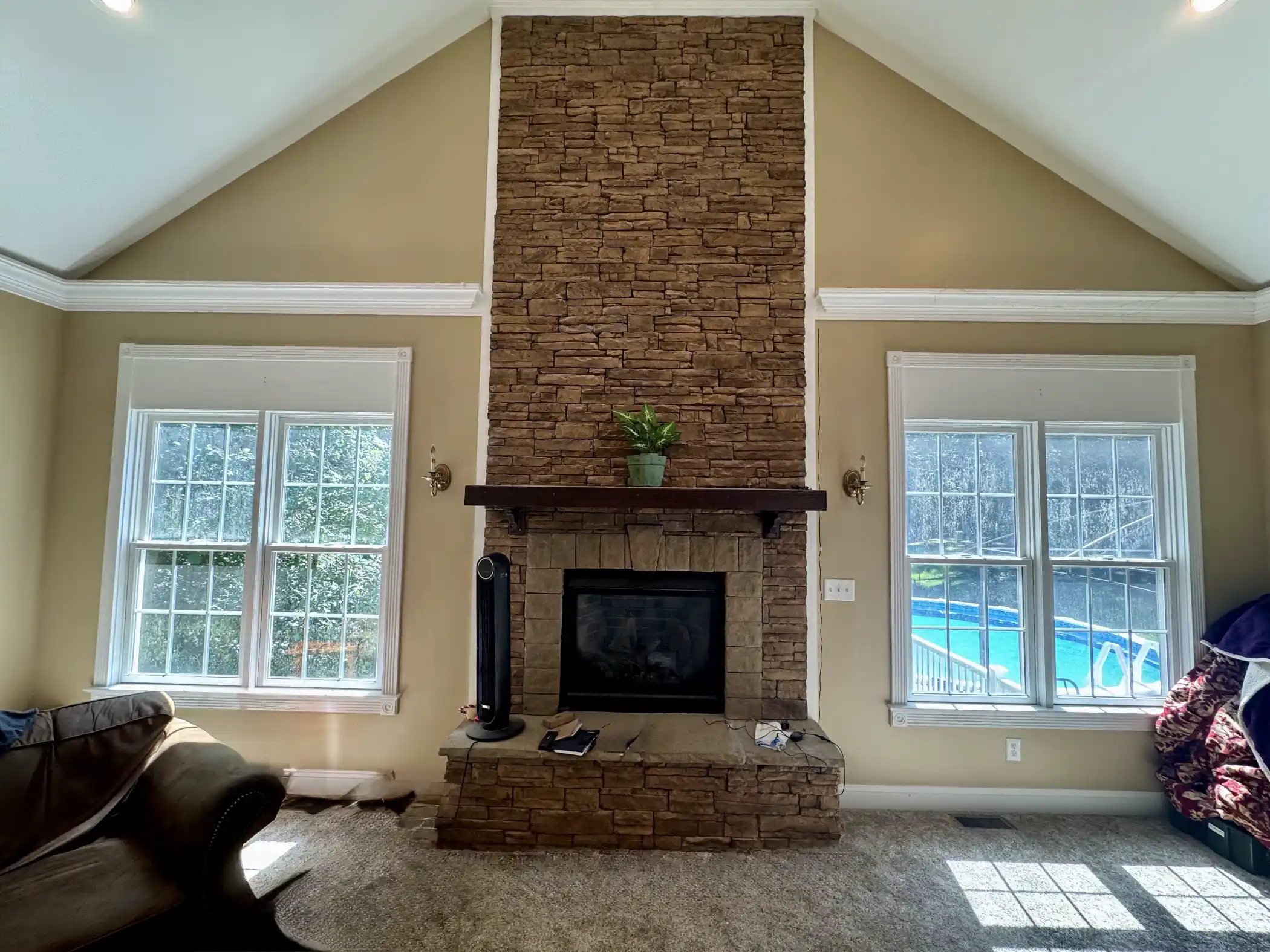
Good accent wall design starts with placement. Natural focal points for accent walls include areas behind beds or fireplaces, and accent walls can highlight architectural features like fireplaces.
The placement test is simpler than most people make it: “the focal point of a room is where your eye naturally travels” when you enter — the fireplace, the headboard wall, the TV wall — and that wall is usually the one that earns the accent.
— Source: This Old House, “How To Choose a Stunning Accent Wall for Your Home”
Other great candidates:
- A wall with built ins, like built in bookshelves
- A wall that frames an architectural detail (arches, trim layouts, niches)
- The first wall you see when you enter the room
This approach also helps your wall decor—art, shelves, and picture frames—look intentional instead of scattered.
Living Room Inspiration: Make The Seating Area Feel Grounded
If you want quick living room inspiration, start with the wall that anchors your seating area. These living room designs tend to look best when the accent wall connects visually to what’s already in the living space.
Use these simple anchors:
- Pull one color from the area rug
- Repeat it in 1–2 accessories (pillows, art, throws)
- Make sure big furniture pieces don’t fight the accent color
A few styling helpers that make a living room feel complete:
- A centered coffee table
- Matching or balanced side tables
- Layered lighting, including floor lamps, so the accent wall reads well at night
The rug is the cheat code: pull the accent color from a rug you already own, echo it in two accessories, and the wall instantly looks like it was planned from day one.
Dining Room Accent Walls: Energy And Warmth
Dining rooms can handle stronger color because you’re not staring at them all day.
Popular options:
- Red accent walls add energy to dining rooms. (A red accent wall adds vibrancy to dining rooms.)
- Brown accent walls create a luxurious atmosphere in dining areas.
A bold wall behind a console or a bar cart can act like a statement piece without adding clutter. It’s also a great way to “dress up” a dining room that otherwise feels plain.
Bedroom And Guest Room Accent Walls: Calm Or Playful, Your Choice
Bedrooms usually do best when the accent feels restful. Color ideas that match current trends:
- Green accent walls create a fresh, organic vibe.
- Light blue accent walls evoke summer skies indoors.
- Pink accent walls bring playfulness to guest room spaces.
You can also use dark shades. Bold or dark colors can ground a room when used on accent walls, and dark colors can add depth and make small rooms feel dramatic. Accent walls can enliven small spaces with bold colors when you keep the surrounding walls lighter.
Bathroom Accent Walls: Small Room, Big Impact
Bathrooms are ideal for controlled drama:
- Dark blue accent walls add a majestic feel to bathrooms.
Because bathrooms are small, a single accent wall can create strong contrast without overwhelming the room. Choose finishes that handle moisture and keep ventilation in mind.
Paint, Wallpaper, Or Texture: Four Looks That Feel Custom
Popular techniques for accent walls include painting and using wallpaper. Here are the most common options homeowners choose in 2026:
Painted Accent Wall
Classic and budget-friendly. Accent walls can be painted in colors lighter or darker than other walls, and the best results happen when the color ties back to existing decor.
Color Block
A color block accent wall can define zones (reading corner, desk nook) and create modern contrast with clean lines.
Wallpaper (Including Peel-And-Stick)
Peel-and-stick wallpaper is a non-permanent option for accent walls. It’s also a great choice if you want pattern without committing long term.
Designers have embraced the format for exactly this reason: “peel and stick wallpaper is slowly taking over the world” — it delivers real pattern on a feature wall without the paste, the commitment, or the removal drama of traditional paper.
— Source: Emily Henderson, “The Best Peel and Stick Wallpapers For Your Rental Apartment”
Texture And Wood
Current trends favor textured accent walls that integrate with room decor. Textured materials can elevate a room’s aesthetic on accent walls and can introduce texture without redesigning an entire room.
Wood adds warmth fast:
- Woodwork can add warmth and character to an accent wall when installed properly.
- Wood paneling can create a custom appearance for accent walls.
Creating an accent wall can transform a room by adding depth and texture.
Mirror And Gallery Options (When Paint Isn’t The Star)
Two alternatives that work well:
- Mirrored walls can reflect light and make rooms appear larger.
- A gallery wall can act as the accent. Gallery walls utilize various art pieces to create a personalized accent.
If you go with a gallery wall, keep frames consistent so the arrangement reads clean and purposeful.
A gallery wall is an accent wall you can edit — keep the frames consistent and let the art rotate with your life.
Common Accent Wall Mistakes
- Picking a wall with no purpose (it should draw attention to something)
- Ignoring light (color shifts from day to night)
- Choosing a bold color that clashes with floors, rugs, or furniture
- Not connecting the accent to the rest of the room’s palette
Designers put the hardest rule most plainly: “if your architecture doesn’t support it, don’t do the accent wall” — paint every wall a color you love instead, and the room will look intentional rather than interrupted.
— Source: The Decorologist, “How to Choose an Accent Wall”
DIY Accent Wall Tips For Cleaner Results
A diy accent wall can look professional with good prep and clean lines:
- Patch and sand first so bumps don’t show.
- Wait at least 24 hours before removing painter’s tape.
- Feather out paint edges to minimize lap marks.
- If you’re painting accent wall edges next to trim, take your time.
Done well, an accent wall adds instant personality, helps create visual structure, and can genuinely add character to a room.
One bold wall is the lowest-risk experiment in decorating — a single afternoon and a quart or two of paint, and completely reversible if you change your mind.
If you want more accent wall ideas, start with the focal wall, then select a finish that fits the room’s light, function, and decor.
“The accent walls that still look right five years later all have one thing in common: they were chosen for the room, not for the trend. We help homeowners find the wall with a purpose, match the tone to the floors and light, and cut lines crisp enough that the whole room looks upgraded — not just one wall painted.”
— The team at Legacy Painting, Yorktown, VA · 757-979-2693
If you’d like help choosing the wall, the color, or the finish — or you want the crisp lines of professional interior painting without the taping marathon — Legacy Painting serves Yorktown and Hampton Roads. Call 757-979-2693 or request a free estimate.